
Activity and Exercise Needs of the Japanese Spitz
The Japanese Spitz may look like a fluffy living-room ornament, leading many people to assume that it is a typical lap dog content with one short walk around the block. After years of living with this breed, I can say plainly that this is a misconception. Beneath the snow-white coat is a lively, agile and highly intelligent dog that needs regular exercise and, just as importantly, mental stimulation. In this article, I explain how much activity a Japanese Spitz genuinely needs, which forms of exercise suit the breed best and what owners should avoid so that physical activity remains beneficial rather than harmful.
How Much Exercise Does a Japanese Spitz Really Need?
What Does the FCI Breed Standard Say About Temperament and Movement?
FCI Breed Standard No. 262, which is used by the Polish Kennel Club (ZKwP), describes the Japanese Spitz’s temperament and movement briefly but clearly. The breed is described as cheerful and possessing keen senses – in other words, mentally alert and ready to engage rather than passive. The description of its gait tells us even more about its physical nature: the movement should be swift and active, emphasising that the Japanese Spitz is naturally agile and dynamic. The standard also describes a robust constitution, regarded in the literature as the foundation of the physical ability concealed beneath the breed’s elegant appearance.
The standard does not, however, contain a section entitled “exercise requirements”, nor does it assign the breed an energy rating. More detailed information appears in supplementary sources. The British and New Zealand standards describe the movement as light, agile and energetic and the temperament as lively. Drawing on this active gait, specialist literature generally describes the Japanese Spitz as having a moderate energy level and requiring regular exercise – around an hour a day – to maintain physical and emotional balance. I explain more about how the breed’s conformation and coat affect everyday life in our article about Japanese Spitz appearance.
A Realistic Amount of Daily Exercise
In practice, an adult Japanese Spitz needs around an hour of activity each day. This does not mean one long march, but several outings combined with play. A routine of three daily walks works well for my dogs:
- a short morning walk to stretch the legs and attend to the dog’s needs;
- a longer walk during the day, lasting around 30 minutes and including some play;
- a calmer walk in the evening.
For dogs living in flats, Marco G. Piasentin recommends at least four outings a day – in the morning, at midday, in the late afternoon and in the evening – to meet their basic needs and provide a minimum amount of exercise. Other guides recommend at least three walks. The literature rarely gives fixed distance limits, although there are reports of individual dogs running between 7 and 12 km a day with their owners. These are exceptions rather than the norm, and I treat such figures with caution.
The important point is that walking on a lead is not enough on its own. A Japanese Spitz also needs energetic play, such as retrieving, chasing a ball or playing tug, as well as opportunities to run freely off the lead in a safe place. Physical exercise should be combined with mental challenges because training and interactive play can tire this intelligent dog more effectively than walking alone. Some dogs have less stamina and may become tired after only 20 minutes of intense activity, so I always adapt the amount and intensity to the individual. A Japanese Spitz whose needs have been properly met becomes a calm and contented companion at home – and that is exactly the aim.
The Japanese Spitz Compared with Other Spitz Breeds – A Happy Medium
The Japanese Spitz is generally regarded as a breed with moderate exercise requirements. It is active and lively, but its needs are considerably lower than those of many other Spitz and primitive breeds. Unlike larger relatives such as the Siberian Husky and Samoyed, it does not require extreme exertion or hours of running. It has less physical stamina than a sled dog, and exercise is primarily a way for it to spend time with its owner rather than an end in itself. I compare the Japanese Spitz and the Samoyed in greater detail in a separate article.
Compared with the German Spitz, the Japanese Spitz is generally calmer and less reactive, while German varieties may be more territorial and require closer management of their energy. It is larger than the Pomeranian but also tends to be more balanced and composed, whereas the smaller dog may be bolder and more excitable. Two further characteristics make everyday life easier. The first is the breed’s adaptability: a Japanese Spitz can thrive in a flat as long as its exercise needs are met. The second is its relatively weak prey drive compared with breeds such as the Shiba Inu or Akita, making walks less demanding when it comes to controlling the urge to chase. Put simply, the Japanese Spitz offers a happy medium: more active than a typical lap dog, but without the considerable working demands of many Nordic breeds.
Differences Between Males and Females and Across Life Stages
The FCI standard distinguishes between the sexes mainly in terms of size, noting that females are slightly smaller. More detailed descriptions of temperament can be found in the literature. Males are sometimes described as more impetuous and dominant and may need slightly more space and more frequent outings to express their territorial instincts. Females tend to be lighter and more agile, with a more complex and cunning personality, although their energy levels are usually similar to those of males. In practice, the individual characteristics of a particular dog matter more than its sex. I discuss the breed’s disposition and temperament in greater detail in our article about the temperament of the Japanese Spitz.
Differences become more apparent across the stages of life. From its earliest weeks, a puppy is full of energy and curiosity, and after moving to its new home it naturally becomes the centre of attention. At this age, activity should consist of short training and socialisation sessions rather than strenuous physical exercise. The dog reaches physical maturity at around 12 months, although its behaviour and emotional maturity continue to develop until approximately two years of age. It reaches its full physical prime at around three years. The breed’s characteristic swift and energetic movement is most evident in adulthood, when approximately an hour of daily activity combining walking, play and mental stimulation is particularly appropriate. The Japanese Spitz is a long-lived breed, with an average lifespan of 12 to 16 years. Activity naturally declines in senior dogs, but their cheerful disposition and dignity often remain well into old age. Older dogs may develop tracheal problems, so replacing a collar with a harness can help avoid pressure on the neck during walks.
Which Activities Does a Japanese Spitz Enjoy?
Walks, play and canine sports
Despite its elegant appearance, the Japanese Spitz is a lively and capable dog that needs regular activity. Around an hour of daily exercise is usually appropriate, including at least one longer walk of approximately 30 minutes, supplemented by shorter outings. Japanese Spitz dogs are happy to accompany their families on longer excursions, hikes, trips to the beach and car journeys. In safe surroundings, they particularly enjoy running freely off the lead, which allows them to release excess energy.
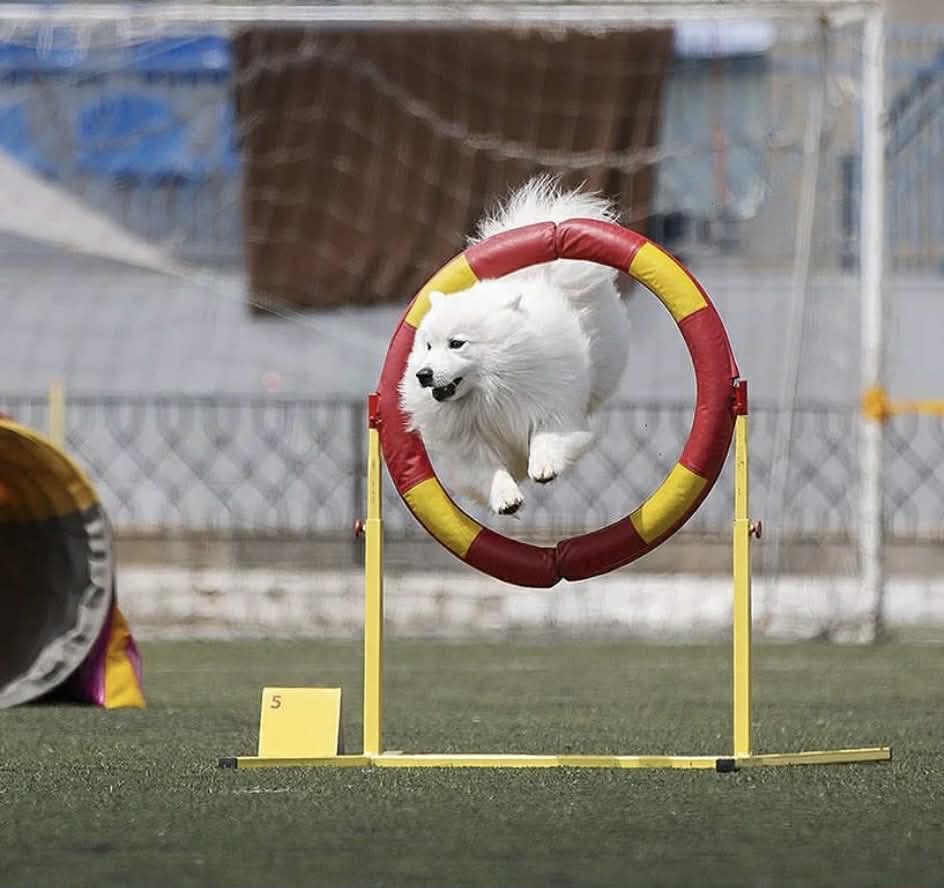
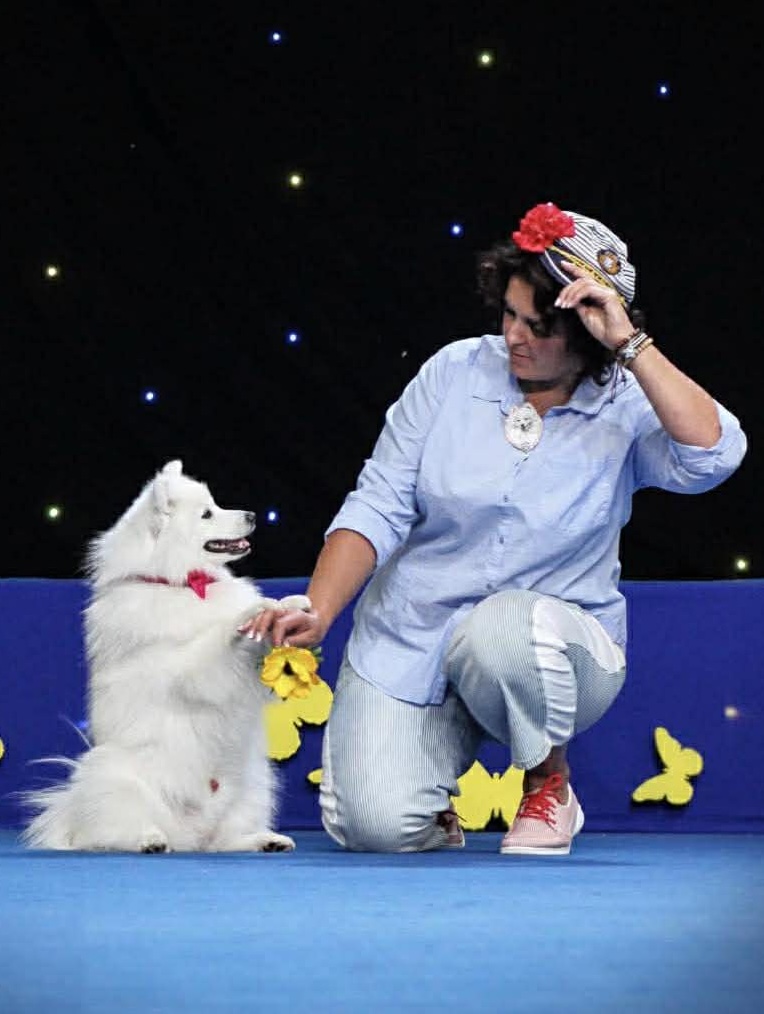
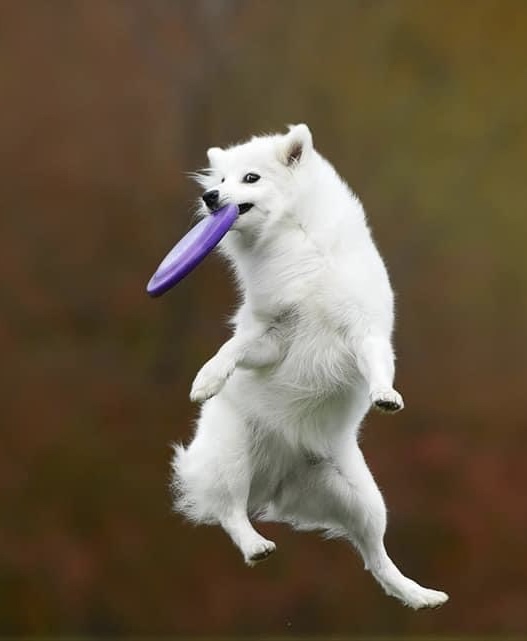
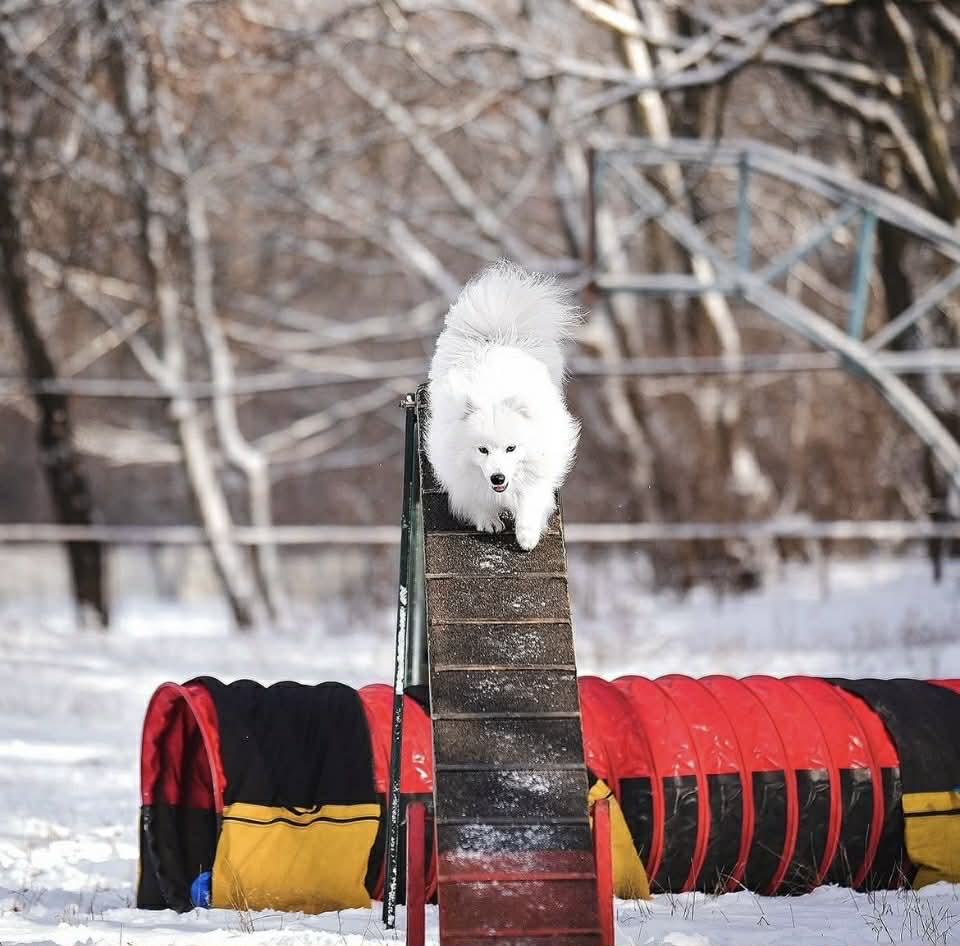
Interactive play is equally valuable. These dogs enjoy retrieving and catching balls, playing tug and taking part in chasing games, while activities such as “find the treat” engage their senses. The Japanese Spitz’s intelligence – sometimes compared in the literature to that of a Harvard graduate – and strong desire to please make it well suited to canine sports. Agility is mentioned most often, as the breed’s speed and agility are particularly useful in this discipline. Japanese Spitz dogs can also perform well in obedience and Rally-O and shine in dog dancing thanks to their cheerful nature. Some organisations also include nosework among the training activities suitable for the breed.

What to Avoid and What to Watch For
Activity must always be adapted to the individual dog’s abilities, and there are several risks to consider. The first is hot weather. Because of its Nordic origins and dense double coat, the Japanese Spitz does not tolerate high temperatures well. On hot days, I take my dogs out only in the early morning or late evening and ensure that they always have access to fresh water, shade and cool indoor spaces. One point is absolutely crucial: a Japanese Spitz should never be shaved or clipped short. Its coat acts as a natural thermal barrier. Removing it does not cool the dog but damages its natural protection against heat and leaves the skin vulnerable to sunburn.
The second consideration is joint health and stamina. The Japanese Spitz is small and has less endurance than large Nordic breeds, so I never push a dog that is showing signs of fatigue. I generally keep a single session of intense activity within a range of 20 to 45 minutes, depending on the individual dog. Like many small and medium-sized breeds, the Japanese Spitz may be susceptible to patellar luxation. I therefore take particular care of the joints of young, growing dogs and avoid prolonged running on hard surfaces such as tarmac or concrete. Puppies should not undertake strenuous exercise before their skeleton has finished developing. In senior dogs, I replace the collar with a harness because of the potential for tracheal problems.
The terrain also requires attention. In woodland and meadows, I watch for grass awns and sharp seeds, which can become lodged in the dense coat, ears or spaces between the toes and cause painful irritation. Reactions to water vary greatly: some Japanese Spitz dogs enjoy swimming, while others avoid even puddles. I never force a dog into the water if it is afraid. Pregnancy requires separate consideration. During the final 20 days, a bitch should avoid excessive exertion, long journeys and jumping, as these activities could endanger the unborn puppies.
Mental and Scent-based Stimulation
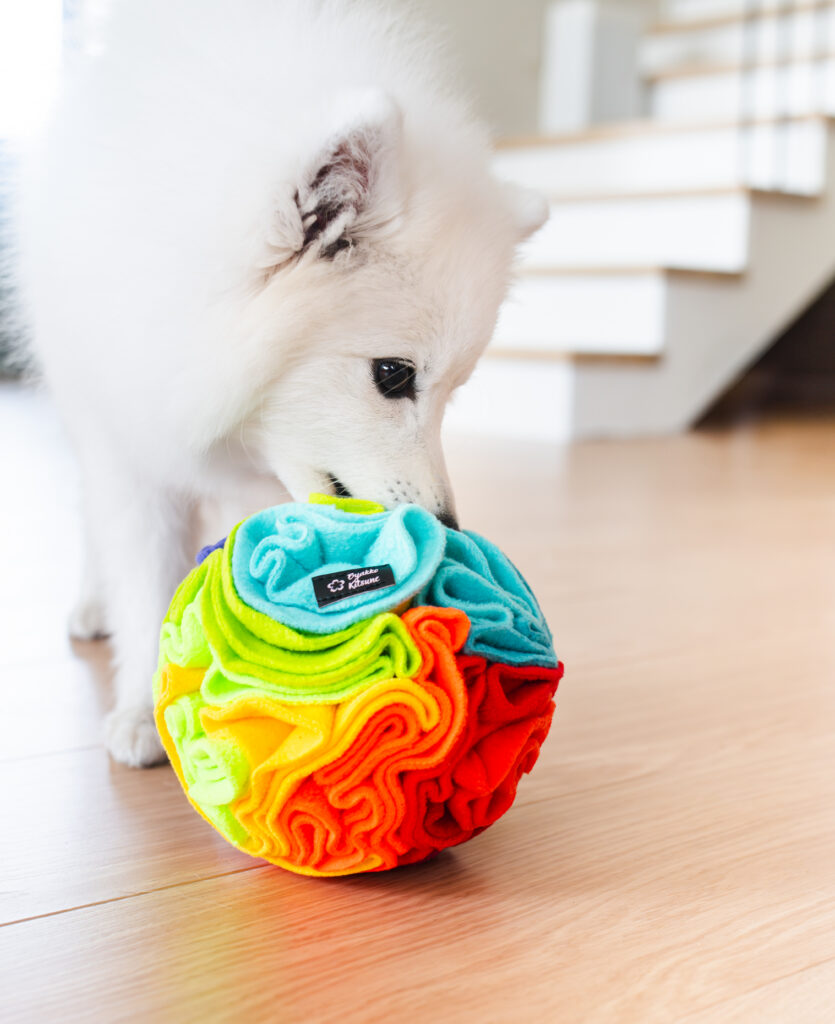
New owners often underestimate this aspect, yet it is essential for the breed. A Japanese Spitz needs meaningful occupation. Without enough mental stimulation, it quickly becomes bored and finds its own entertainment, often resulting in chewed furniture, damaged cushions and other destruction around the home. At the same time, the breed learns remarkably quickly and has a strong desire to please. Learning commands and tricks can therefore be genuinely rewarding. Interactive toys and puzzles that require the dog to work out how to obtain a treat are particularly useful, as are short but regular training sessions.
Although the Japanese Spitz is not a typical scent-working breed, olfactory stimulation remains important because, as the breed standard emphasises, these dogs possess keen senses. Games such as “find the treat” engage the mind and natural instincts while also strengthening the bond between dog and owner. Scent work has another advantage: it helps the dog settle after an energetic walk and channel remaining energy in a calm, controlled way. For me, mental and olfactory stimulation are not optional extras, but equally important parts of care that help prevent behavioural problems and give the dog a sense of fulfilment.
A Flat or a House with a Garden? Weather and Puppy Development
Can a Japanese Spitz Live in a Flat?
Yes – very successfully, provided that its exercise and social needs are met. The literature consistently describes the Japanese Spitz as an exceptionally adaptable breed. A spacious house with a garden, where the dog can express its watchdog instincts, may be considered ideal, but the breed’s adaptable nature also allows it to thrive in a flat. Its small-to-medium size and balanced behaviour at home make it a suitable choice for city residents. A dog living in a flat simply needs regular activity outdoors, with some sources recommending at least four outings a day.
Two things need to be kept in mind. The first is the alert instinct: spitz dogs are usually quieter at home than other breeds in this group, but any rustle on the staircase can trigger loud barking, which can be troublesome in an apartment building. The second is a greater need for discipline and self-control in the city, where the dog encounters plenty of people and animals. A house with a garden, on the other hand, provides freedom of movement and a fuller fulfilment of the guard role, and having its own territory makes it easier to burn off energy every day. The most important conclusion, however, is that for a Japanese Spitz, human closeness means more than square footage. This is a dog that wants to be part of the family, and it doesn't matter where it sleeps, as long as it's close to its people. A garden will never replace mental stimulation and playtime, and if left alone in the yard, it can become noisy out of boredom. I write more about who this breed suits and who it might not suit in my post Who is japanese spitz for?
Exercise and the Weather – Heat, Frost and Why the Coat Must Never Be Clipped
Although the white coat theoretically reflects some of the sun’s rays, the Japanese Spitz is sensitive to high temperatures. During summer, the breed sheds heavily and loses much of its dense undercoat, a natural process that helps it cope with warmer weather. Even so, direct sunlight can be uncomfortable, and many dogs prefer shaded walks, for example in woodland. On hot days, I limit outdoor activity during the warmest hours, choosing the morning or evening instead. I provide water, shade and cool indoor spaces and use cooling mats when necessary. I repeat this because it is one of the most common and dangerous mistakes: a Japanese Spitz must never be shaved in an attempt to keep it cool. Doing so disrupts the coat’s protective function and exposes the skin to sunburn.
The Japanese Spitz copes far better with cold weather than with heat. Its dense double coat provides excellent insulation against cold and moisture, while the abundant hair between the pads helps protect the paws. Even so, the breed clearly prefers the warmth of the family home to living outdoors. The coat has another practical advantage: it behaves rather like Teflon. After a walk in rain or mud, most dirt falls away once the dog has dried or can be brushed out easily, allowing the coat to return to its snow-white appearance. In winter, remember that a white dog can become almost invisible against the snow, so a brightly coloured collar is useful.
Puppy Exercise Step by Step – When to Increase the Distance
A puppy’s activity must be managed particularly carefully while its joints are still developing. During the first stage, roughly until three months of age and completion of the initial vaccinations, I do not take a puppy to public places or allow contact with unfamiliar dogs because of the risk of infectious disease. At this point, exercise consists of free play at home or in a secure garden, while a playpen helps prevent uncontrolled running throughout the home.
Between eight and sixteen weeks of age, the puppy enters its key socialisation period and begins basic obedience training. This is the time for short, regular sessions rather than long walks, as a young puppy has a limited attention span and mental work often tires it more quickly than physical exercise. The period between six and twelve months is adolescence and a time of intensive skeletal growth. I take particular care of the joints, avoiding prolonged running on tarmac or concrete and strenuous exercise before skeletal development is complete. I increase distances very gradually and keep individual sessions within 20 to 45 minutes when the dog shows signs of fatigue. After twelve months, once physical maturity has been reached, walks can be lengthened more safely and more demanding sports such as agility or dog dancing can be introduced. Behaviour and emotional maturity continue to stabilise at around fifteen to sixteen months, while the dog reaches its full physical prime at approximately three years of age.
Finally, remember two practical rules. If a puppy is barely able to move after returning home, the amount of exercise was excessive. Rather than continually extending walks on the lead, it is safer to tire a young dog through puzzle games and scent work, which place less strain on developing joints.
Summary
The Japanese Spitz has moderate but genuine exercise needs: around an hour of activity each day, divided between several walks and supplemented with plenty of play and mental stimulation. A well-planned routine adapted to the dog’s age and condition, sensible precautions in hot weather and protection of the joints in young and senior dogs will help keep a Japanese Spitz healthy, contented and calm at home. To learn more about the breed’s temperament, appearance and everyday care, visit our comprehensive Japanese Spitz guide.
Sources
- FCI Breed Standard No. 262 – Japanese Spitz (English version, PDF) – the official standard published by the Fédération Cynologique Internationale and based on the Japanese breed standard.
- FCI Breed Standard No. 262 – Japanese Spitz (Polish version, PDF) – the Polish translation of the FCI breed standard published by the Polish Kennel Club (ZKwP).
- Japanese Spitz Breed Standard – The Royal Kennel Club – the British breed standard, also used by Dogs Australia.
- Japanese Spitz Breed Standard – Dogs New Zealand – the New Zealand breed standard.
- United Kennel Club (UKC), Japanese Spitz Breed Standard – the American breed standard, which lists nosework among the activities available to the breed.
- Marco G. Piasentin, Japanese Spitz – a comprehensive breed monograph and one of the most important specialist sources.
- Miwako Okada, Spitz Bible (スピッツバイブル) – a Japanese publication devoted to the history and development of the breed in its country of origin.
- Photographs from agility training courtesy of the Bella Neve kennel, published with the owner’s permission.
- Original work and breeding observations by Byakko Kitsune FCI, informed by official breed standards, specialist cynological literature and our own experience with the Japanese Spitz.