
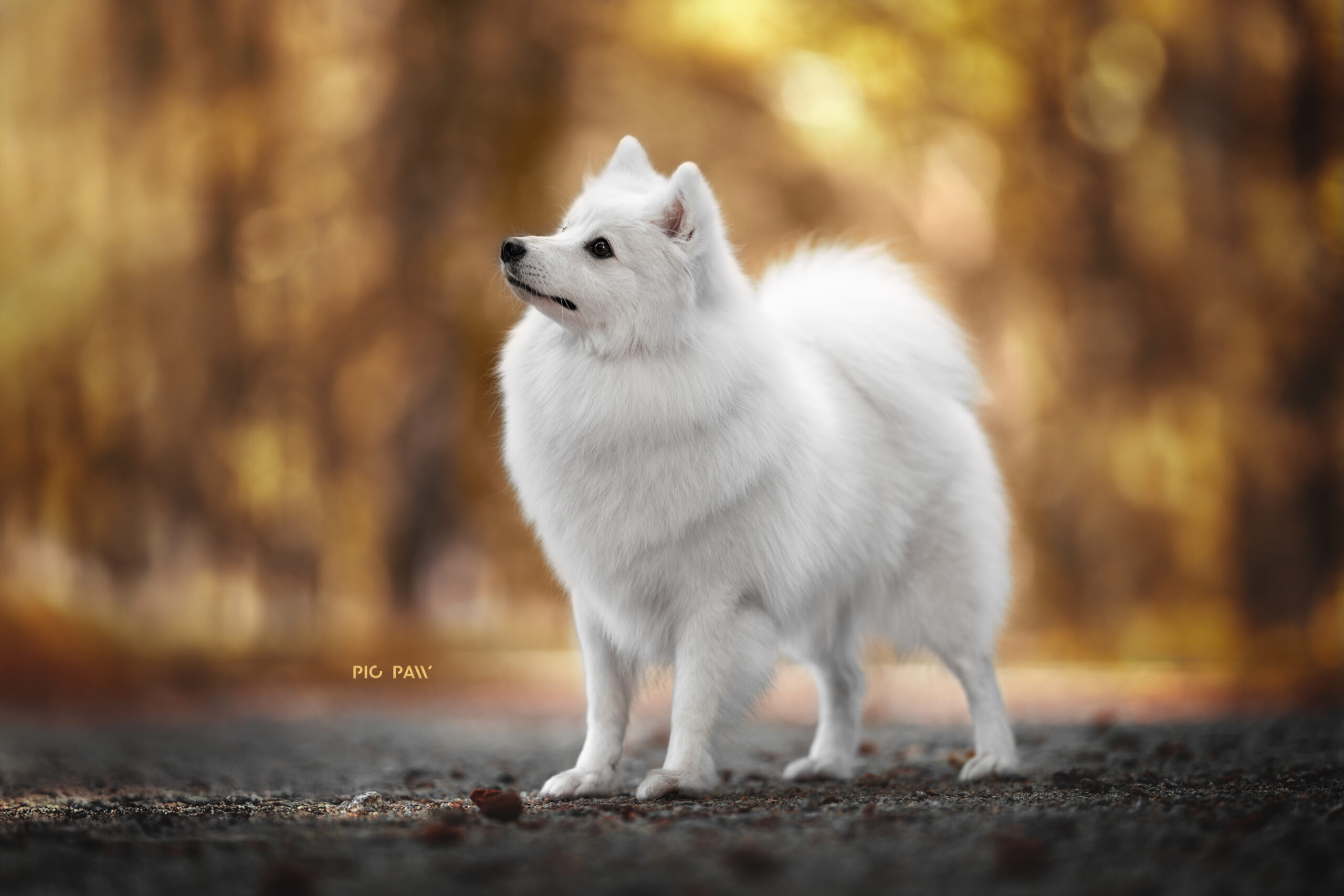
Japanese Spitz
A Complete Guide to the Breed
Discover the Japanese Spitz — a distinctive-looking, even-tempered breed that makes a wonderful family companion.
Japanese Spitz: Temperament, Appearance, Grooming and Health
The Japanese Spitz is one of those breeds that first catches your eye with its appearance and then wins your heart with its temperament. Its snow-white, self-cleaning coat, fox-like face and alert, dark eyes give it the appearance of a living teddy bear. Beneath that charming exterior, however, is an intelligent and sensitive dog with a deep attachment to its family.
Our kennel is registered with the Polish Kennel Club (ZKwP), a member of the Fédération Cynologique Internationale (FCI). We created this guide from first-hand experience of living with and breeding Japanese Spitz. It covers the key things to know before choosing the breed and after welcoming a puppy into your home - from the breed’s origins and official standard to temperament, grooming, health and practical advice for prospective owners.
We have organised our knowledge of the breed into a clear, chapter-by-chapter guide. You can explore each topic independently by selecting “Read more”.
Japanese Spitz at a Glance
- FCI Group: 5 – Spitz and Primitive Types
- FCI Section: 5 – Asian Spitz and Related Breeds
- FCI Standard: No. 262
- Working trial: Not required
- Country of origin: Japan
- Size: Small breed
- Height at the withers: Males 30–38 cm; females slightly smaller
- Weight: Approximately 5–9 kg
- Life expectancy: 12–16 years
- Coat colour: Pure white
- Purpose: Companion dog
- Temperament: Intelligent, alert, cheerful, gentle and devoted to its family
Discover the Breed
Origins and History of the Japanese Spitz
Although the name suggests a Japanese origin, the Japanese Spitz is descended from white Spitz dogs imported from Europe and North America in the 1920s. It was Japanese breeders who gave the breed its current form, and the official breed standard was not established until after the war. Explore the full history of the breed – from the first white Spitz to its recognition by the FCI.
The Japanese Spitz in Poland
The first pair of Japanese Spitz arrived in Poland as late as 1998, and the breed had to wait over two decades for its first Polish-bred litter. Today, it remains a rare breed with a small gene pool, which places a special responsibility on Polish breeders to ensure its health and development. Find out how the breed has established itself in Poland and what its current status is.
Appearance and the FCI Breed Standard
The Japanese Spitz is a small, harmoniously built dog with a rectangular silhouette, covered in a thick, pure white coat. The FCI breed standard precisely describes every feature – from the fox-like muzzle and triangular, erect ears to the feathered tail carried over the back. Find out more about the breed’s detailed appearance and what the official standard requires.
Types within the Japanese Spitz Breed
Contrary to what one might read in popular sources, breeding literature sometimes distinguishes more than two types of Japanese Spitz, differing in temperament and minor physical characteristics. This is knowledge that only becomes fully apparent through hands-on breeding experience. We explore this topic in more detail in a separate article.
Temperament and Personality
Intelligent, alert and extremely devoted to the family – the japanese spitz combines liveliness with a keen sense of the family atmosphere. It can be an attentive guard dog without excessive barking and a patient companion for children, although it may be initially wary of strangers. Find out what this breed’s temperament is like in everyday life.
Fascinating Facts About the Japanese Spitz
Self-cleaning coat, no typical „doggy smell”, Japanese roots that actually trace back to Europe – the japanese spitz has plenty of surprising facts to its name. We’ve gathered the most interesting ones in one place. The perfect introduction to whet your appetite for a deeper understanding of the breed.
Living with a Japanese Spitz
Grooming and Coat Care
Despite its impressive coat, grooming a Japanese Spitz is surprisingly simple – regular brushing is all it takes, and thanks to its texture, the fur naturally repels dirt. The key is knowing what not to do: a Spitz should never be shaved or trimmed, so as not to damage the undercoat. Discover how to care for the white coat and breeze through the shedding season.
Japanese Spitz Health and Recommended Tests
The Japanese Spitz is a healthy and long-lived breed, but the responsible kennel does not leave this to chance. The most common issues are patellar luxation and eye health – which is why dogs at the FCI kennel undergo appropriate tests before being approved for breeding. Find out what to look out for and what tests a stud dog should undergo.
Japanese Spitz Feeding and Nutrition
A small, active dog with a dense coat has specific nutritional needs – a good diet translates directly to their condition, skin and coat quality. There is no single „best food”, but rather a diet tailored to the dog's age and lifestyle. We offer advice on how to wisely feed a Japanese Spitz at every stage of life.
Japanese Spitz Exercise and Mental Stimulation
The Japanese Spitz has moderate exercise needs – a daily walk and a bit of play are more than enough, and it’s just as happy living in a flat as it is in a house with a garden. However, it is an intelligent dog that also needs mental stimulation. Find out how much exercise and what kind of stimulation it really needs.
Before Choosing a Japanese Spitz
Is the Japanese Spitz Right for You?
The Japanese Spitz is ideal for families with children, older people and singles – it’s versatile and easy to handle, even for first-time owners. But like any breed, it has its pros and cons, which are best known before you make a decision, rather than after. Take an honest look at who this breed will be a perfect fit for, and who it might disappoint.
How to Choose a Responsible FCI-Registered Breeder
The price of a szczeniak with a FCI pedigree doesn’t come out of thin air – it reflects the parents’ testing, association fees, a valid socialisation certificate and years of work on the kennel line. We explain how kennel and FCI differ from random breeding, and what to watch out for to avoid falling for a pseudo-breeding operation. This is the most important section if you’re thinking of buying a szczeniaka.
Japanese Spitz Compared with Similar Breeds
White, fluffy and smiling – the japanese spitz is sometimes mistaken for a Samoyed, a white German Spitz or an American Eskimo. There are, however, quite a few differences: in size, temperament and origin. We’re comparing the Japanese Spitz with similar breeds so that you know what really sets it apart.
Your Journey with Byakko Kitsune
Bringing Your Japanese Spitz Puppy Home
The first few days of your szczeniaka’s life in its new home will set the tone for years to come – from getting everything ready and creating a safe space to the first night and toilet training. We’ve put together a practical guide for new owners of Japanese Spitz puppies. Step by step, stress-free – for your dog and for you.
How We Match Japanese Spitz Puppies with Their Families
Here at puppy, we don’t simply place a dog with the first person who comes along – the most important thing is to match a specific puppy with a specific home, not the order in which applications are received. The whole process, from the initial chat and questionnaire, through the list of families and booking, to selecting a puppy based on its temperament, leads to one thing: ensuring the dog goes to the right family, rather than simply being placed quickly. See what the step-by-step process is like when buying a Japanese Spitz puppy from us.